Thoughts for June 18 from Fr Willie Doyle

A great desire to know our Lord better, His attractive character, His personal love for me, the resolve to read the life of Christ and study the Gospels.

I feel also a longing to love Jesus passionately, to try my very best to please Him, and to do all I think will please Him. I see nothing will be dearer to Him than my sanctification, chiefly attained by the perfection with which I perform even the smallest action. “All for love of Jesus.”

The reason, said Fr. Petit, why we find life so hard, mortification difficult, and why we are inclined to avoid all that we dislike, is because we have no real love for Jesus.

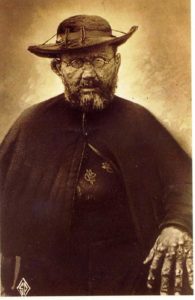
COMMENT: Venerable Adolphus Petit was Fr Doyle’s spiritual director during his year of tertianship, the final year of formation for Jesuits before they take their final vows. He had a great respect for Fr Doyle – he is yet another “saint” who approved of Fr Doyle’s spirit and life. Here is Fr Doyle’s description of him:

There is a wonderful little old priest here, named Fr. Petit, small in name and small in size – he is about three feet high. He is eighty-five, but as active as a man of thirty, being constantly away giving retreats. I have tried several times to get down to the chapel at four o’ clock in the morning before him, but he is always there when I come in. He is a dear saintly old man with wonderful faith and simplicity. In the middle of an exhortation in the chapel, he will turn round to the Tabernacle and say: Is not that true, my Jesus? He is giving a retreat here this moment to a hundred and ten gentlemen.

Once again, there is much that one can reflect on here. The last line is key: we find life so hard, mortification difficult, and…we are inclined to avoid all that we dislike…because we have no real love for Jesus.

Most people have family and/or friends that they love in life, and are generally willing to make great, even heroic efforts, to serve them because of this love. Can the same be said about our service of Christ?

Venerable Adolphus Petit

Thoughts for June 17 from Fr Willie Doyle

I feel also a great longing to love Jesus very, very much, to draw very close to His Sacred Heart, and to be ever united to Him, always thinking of Him and praying. I long ardently to do something now to make up for my neglect in the past to give myself heart and soul to the service of God, to toil for Him, to wear myself out for Him. I wish to be able never to seek rest or amusement outside of what obedience imposes, so that every moment may be spent for Jesus. I have not a moment to lose, I cannot afford to refuse Him a single sacrifice if I wish to do anything for Jesus and become a saint before I die. If I go to the Congo, I certainly shall not live long. In any case can I promise myself even one day more? I must try to look upon this day as my last on earth and do all I can and suffer all I can for these few hours. It is not a question of keeping up full steam for years, but only for to-day.

If I am faithful to the resolution of “doing all things perfectly”, I shall effectually cut away the numerous faults in all my actions. By working hard at the Third Degree I shall best correct those things to which my attention has been drawn. I know all this is going to cost me much, that I shall have a fierce battle to fight with the devil and myself. But I begin with great hope and confidence, for since Jesus has inspired me to make these resolutions and urged me on till I did so, His grace will not be wanting to aid me at every step.

In the name of God, then, I enter upon the Narrow Path which leads to sanctity, walking bravely on in imitation of my Jesus who is by my side carrying His cross. To imitate Him and make my life resemble His in some small degree will be all my life’s work, so that I may be worthy to die for Him.

COMMENT: There is much that one could reflect about in these retreat notes from Fr Doyle. Three points, out of many possibilities, suffice.

It is not a question of keeping up full steam for years, but only for to-day. This idea is a recurring one in the thought of Fr Doyle. All we have to offer God is the present moment. Living in that present moment, and sanctifying it, is the essence of sanctity. This is especially important if we suffer or are offering up some penance. We don’t know if we will have to suffer tomorrow, or next month or next year. But even if we do, we don’t have to bear those sufferings right now. We have only the sufferings or duties or work of this moment. When this moment is over, we will never have to bear its sufferings again. Elsewhere in his notes, Fr Doyle relates this principle to dryness in prayer. If we struggle in prayer, well we needn’t worry about the fact that we have to stay still and pray for an hour. All we have to do is to pray for this one minute. After that, we pray for another minute, and so on, step by step.

Faithful to the resolution of “doing all things perfectly”. We will never succeed in doing all things perfectly, but we must at least try, and keep beginning again and again when we fail. Faithfulness in little duties sounds easy, but is incredibly hard in practice, and it is the ordinary path to sanctity for all of us.

In the name of God, then, I enter upon the Narrow Path which leads to sanctity. Matthew 7:13-14:

Enter through the narrow gate; for the gate is wide and the road broad that leads to destruction, and those who enter through it are many. How narrow the gate and constricted the road that leads to life. And those who find it are few.

The choice of the narrow path is not a once off decision but rather one to be made each moment of each day. It is the decision to adhere to our duty when we would rather ignore it. It was this constant, moment by moment adherence to the narrow path in little things that created the selfless hero of the trenches.

Fr Doyle ended up literally walking a “narrow path” during his time in the trenches

Thoughts for June 16 from Fr Willie Doyle

I felt the presence of Jesus very near to me while praying in the chapel at Ramsgrange. He seemed to want me to write down what He said: ‘I want you, my child, to abandon every gratification, generously, absolutely, for the love of Me. Each time you give in to yourself you suffer an enormous loss. Do not deceive yourself by thinking that certain relaxations are necessary or will help your work. My grace is sufficient for you. Give Me all at all times; never come down from the cross to which I have nailed you. Be generous, go on blindly, accepting all, denying yourself all. Trust in Me, I will sustain you, but only if you are really generous. Begin this moment and mortify every look, action, desire. No gratification, no relaxation, no yielding to self. Surrender yourself to Me as My victim and let Me make you a saint.’

COMMENT: Fr Doyle recorded this message 101 years ago today, on June 16, 1912.

Fr Doyle was something of a mystic; the later editions of O’Rahilly’s biography make this much clearer than the earlier editions do. Fr Doyle seems to have received several messages similar to this one around this particular period of his life. Perhaps these messages or inspirations continued right to the end of his life, we do not know.

What are we to make of such inspirations? Well, ultimately they matter little. While various kinds of inspirations and messages are common in the lives of saints and other holy people, they are neither necessary for sanctity nor are they are a guarantee that the person practiced heroic sanctity. In general, this website has tended to avoid discussion of the mystical graces that Fr Doyle seems to have received. There is a good reason for this – they are unnecessary for our own progress and, 100 years removed from the event, we cannot be sure whether they were truly divinely inspired. Indeed, we should avoid too much curiosity about such mystical phenomena in general, especially when they have not been approved by the Church. Even St Pio, surely one of the saints most closely associated with extraordinary mystical phenomena in recent centuries, used to become impatient with those who were too curious about such things, insisting that it is better to live by faith alone without seeking “proof” of the supernatural in this way.

Clearly the core of this message – that of denying oneself always and in everything – is not of immediate, universal application. This was a particular call that Fr Doyle felt within himself, and it seems to have been approved by his confessor. It is not the road that most people are expected to follow.

Nonetheless, there are three particular messages that we may take from today’s quote and apply to our own lives.

Firstly, the idea that every time we yield, we suffer a loss. Obviously this is true of mortal sin. We suffer an incalculable loss whenever we freely consent to such sin. We lose the life of grace in our soul, we lose all of the merit we have accumulated in our life to date and we would end up losing eternal life if we were to die without repenting. However, we also lose even by giving in to venial sin. We may not lose the state of grace, but we also lose out on acquiring extra graces as a result of our struggle against sin. The same also applies to our purely temporal affairs. Every time we yield to the desire to eat chocolate we lose in our battle to stick to a diet; every time we yield to the temptation to stay in bed longer we lose in our battle to be more effective in our working day. The principle has many applications which we can easily apply to our own lives.

Secondly, we see in today’s quote the importance of trusting in Jesus. According to Fr Doyle’s perception, Jesus indicated that His grace was sufficient for him. This echoes the famous prayer of St Teresa of Avila:

Let nothing disturb thee, let nothing dismay thee, all things pass.

God never changes, patience attains all that it strives for. He who has God finds he lacks nothing.

God alone suffices.

Finally, Fr Doyle felt that Jesus said to him: “Let Me make you a saint”. We have to make serious efforts ourselves through various acts of piety and asceticism, but ultimately these are never enough on their own and they always require the addition of grace. If we do what we are meant to do, we can be assured that Jesus will provide the grace that we need to reach the sanctity He has in mind for us.

Thoughts for June 15 from Fr Willie Doyle

One of the obstacles to my leading a fervent life is the thought of what others may think. I would often wish to do some act of mortification, but I am prevented because I know others will see it. Again, I desire to keep certain rules which I have broken (e.g. Latin conversation), but a false shame, a fear of what others may say, stops me. I know this is a foolish, mean and small spirit; but it is alas too true in my case. I must pray to overcome it and make some generous acts against this false shame and pride.

COMMENT: If Fr Doyle suffered from the problem of human respect – an untoward concern for what others think of us – then there is little surprise that we ourselves might fall prey to it as well. This is especially challenging for us who live in a culture where religious faith is scoffed at and where those who practice it are viewed as being intellectually challenged and uneducated. In some respects, the prevailing norms in Europe make living the faith almost like a “social martyrdom”. We now have festivals and public spectacles that are designed to celebrate and normalise sin.

If we shrink from living our faith for fear of human respect, then we cannot hope to effectively shape the culture in which we live. We must be coherent Christians. Yes, we should practice our faith with discretion and balance, but we should do so without fear. Perhaps the words of St Jean-Marie Vianney, to whom Fr Doyle was especially devoted, might help on this point:

The first temptation, my dear brethren, which the Devil tries on anyone who has begun to serve God better is in the matter of human respect. He will no longer dare to be seen around; he will hide himself from those with whom heretofore he had been mixing and pleasure seeking. If he should be told that he has changed a lot, he will be ashamed of it! What people are going to say about him is continually in his mind, to the extent that he no longer has enough courage to do good before other people. If the Devil cannot get him back through human respect, he will induce an extraordinary fear to possess him that his confessions are not good, that his confessor does not understand him, that whatever he does will be all in vain, that he will be damned just the same, that he will achieve the same result in the end by letting everything slide as by continuing to fight, because the occasions of sin will prove too many for him.

St John Vianney


Thoughts for June 14 from Fr Willie Doyle

I feel that I could go through fire and water to serve such a man as Napoleon, that no sacrifice he could ask would be too hard. What would the army think of me if Naploeon said “I want you to do so and so”, and I replied “But, your Majesty, I am very sensitive to cold, I want to have a sleep in the afternoon, to rest when I am tired, and I really could not do without plenty of good things to eat!” Would I not deserve to have my uniform torn from me and be driven from the army, not even allowed to serve in the ranks? How do I serve Jesus my King? What kind of service? Generous or making conditions? In easy things but not in hard ones? What have I done for Jesus? What am I doing for Jesus? What shall I do for Jesus?

COMMENT: What have I done for Jesus? What am I doing for Jesus? What shall I do for Jesus? It was regular reflection on these questions that shaped Fr Doyle’s will and strengthened him for the martyrdom that he suffered. For Fr Doyle, Napoleon was a compelling figure. For us, 100 years on, perhaps it is a more contemporary military or political figure that attracts. How many people would go through fire and water for the current President of the United States? Or even for a sports star or a celebrity? But if we would happily serve such an “idol”, how much more willingly should we serve our Creator to Whom we owe everything?

What have I done for Jesus? What am I doing for Jesus? What shall I do for Jesus?

Thoughts for June 13 from Fr Willie Doyle

Pope leads Benediction after Eucharistic adoration in St. Peter's Basilica at Vatican

The Moment of Benediction.

The priest turns and raises aloft the Sacred Host. In loving adoration, in reverent awe, the invisible angels fall prostrate. The bell tinkles softly, fragrant clouds of sweet-smelling incense ascend on high, and in the remotest corner of the vast church every head is bowed in adoration. It is a solemn moment, a moment when the silent streams of grace pour down upon our souls. God’s hands are lifted up to bless us; His sacred face is turned upon us, and He waits oh ! so eagerly for us to ask some favour that He may win our hearts by His generosity. Let us ask, then, confidently and show our trust in God’s great goodness by the boldness of our requests.

COMMENT: Fr Doyle recommends that we be bold in our requests. This comes from a priest who knew the power of God, for he saw it at work firsthand in his own life.

God wants to give us His blessings and His graces. It is true that he doesn’t want to be treated like a heavenly ATM machine, and there is surely something defective in our spiritual life if we only call on Him when we are in trouble. But none of this changes the fundamental generosity of God. He wants to help us, and sometimes He will even work real miracles to assist us. If we do not ask for miracles we will not receive them!

Today is the feast of one of the great miracle workers in the Church – St Anthony of Padua, Doctor of the Church. In many churches, St Anthony’s statue is one of the most popular ones; it is not unusual across Europe to find an overflowing pile of papers stuck into the statue’s hands. These requests for favours come from all sorts of people of every age. Perhaps there are those who might be tempted to sneer at this simple piety and devotion. It is surely not to everyone’s taste, but that does not mean that it is not to God’s taste. St Anthony’s enduring popularity surely indicates that he is an effective intercessor for those of us who still journey on this earth.

Let us be bold in our requests, both to God Himself, and also through the intercession of Mary, our guardian angel, the souls in Purgatory and the saints. We can also be bold in our requests (privately, of course!) of those who have not been canonised, including Fr Doyle himself. 

Thoughts for June 12 from Fr Willie Doyle

The Third Degree of Humility.

1. Accepto. I will receive with joy all unpleasant things which I must bear : (a) pain, sickness, heat, cold, food; (b) house, employment, rules, customs; (c) trials of religious life, companions; (d) reprimands, humiliations; (e) anything which is a cross.

2. Volo et desidero. I will wish and desire that these things may happen to me, that so I may resemble my Jesus more.

3. Eligo. Wtih all my might I will strive every day agere contra in omnibus: (a) against my faults; (b) against my my own will; (c) against my ease and comfort; (d) against the desires of the body; (e) against my habit and inclination of performing my duties negligently and without fervour.

COMMENT: Today’s text from Fr Doyle comes from his notes on the Long Retreat in the autumn of 1907. This retreat was to have a profound influence on his life; everything that came after, including his sacrifices in the trenches, seem to be fruits of the seeds that were planted on this retreat.

In these notes, Fr Doyle reflects on St Ignatius’ meditation on the three types of humility, which is placed during the second week of the Spiritual Exercises. The full text from Ignatius is as follows:

Third Humility. The third is most perfect Humility; namely, when…in order to imitate and be more actually like Christ our Lord, I want to choose poverty with Christ poor rather than riches, opprobium with Christ replete with it rather than honours; and to desire to be rated as worthless and a fool for Christ, Who first was held as such, rather than wise or prudent in this world.

Fr Doyle shows us a way in which we can attempt to reach this degree of humility, namely by acting agere contra in omnibus – against myself in all things. This was the basis of Fr Doyle’s spirituality, and it is crucial to remember that the hero of the trenches was not born that way – he made himself strong and courageous, with God’s grace, by acting against himself in small things every day. We do not need to act against ourselves in ALL things – Fr Doyle had a special calling that is different from ours. But if we do not act against ourselves in SOME things we become spiritually weak and flabby, we become selfish and unattractive to live with in our families and communities.

The benefits of this spiritual discipline can help us not only in spiritual terms but in human terms as well. The Jesuit priest, Fr Walter Ciszek, who suffered greatly for the faith in prison camps in Siberia and elsewhere in Russia, reports in his own memoirs that it was his own daily discipline in denying himself that helped him prepare for long years of deprivation, solitude and hard work.

Fr Doyle, Fr Ciszek and so many saints show us in their lives that traditional ascetical practices not only train us for the next world, but they also equip us to face challenges in this life as well.

Fr Walter Ciszek SJ

Thoughts for June 11 from Fr Willie Doyle

Venerable Matt Talbot

I do not want, in fact I forbid you, to be imprudent in the matter of corporal penances. But, my dear child, if you let a whole fortnight go by without any self-inflicted pain, can you honestly look Jesus in the face and say, “I am like to Him”?

COMMENT: The idea of self-inflicted pain is not popular in contemporary spirituality. Oddly enough though, it seems wildly popular in modern secular culture with its fad for physical fitness and punishing bodies in the gym in order to make them ever more attractive…

Physical mortification was the norm in Fr Doyle’s day – there was nothing unusual in it all. While Fr Doyle was quite severe on himself on occasion, he always urged caution on the part of others. However, despite his caution, he issues an interesting challenge today – do we really imitate the crucified Christ if we do not do penance ourselves, even in some small fashion? The self inflicted “pain” Fr Doyle speaks of need not be something very big or burdensome. Getting up a little earlier, going to bed on time, reducing time wasted on television, starting work on time, biting our tongue when we want to criticise someone, not taking salt on our dinner… There are many ways that we can practice a measured asceticism that is discreet, balanced, humble and will improve both our spiritual and temporal lives.

Last Friday was the anniversary of the death of Venerable Matt Talbot, but we had three separate posts on that day, so we are only finding time to commemorate Matt today.

Matt died in 1925. He was close to the Jesuits and attended the Jesuit Church in Gardiner Street almost every day for many years. Fr Doyle was based in Belvedere School (about 200m from this church) for about a year around 1909. It is probable that he lived in the community in Gardiner Street. It seems more than likely that Fr Doyle crossed paths with Matt Talbot at some stage. However, we have no record of such an event, so we can only speculate. Similarly, we have no record of Matt having read O’Rahilly’s biography of Fr Doyle. Yet, Matt – despite being an unschooled labourer – was a voracious reader of spiritual literature and especially of spiritual biographies. It would be most strange if he never read this wildly popular book about a heroic local Jesuit. We know that he used to give books away or lend them to others, so perhaps he had it and passed it on. We shall never know…

As is well known, Matt dropped dead on the street while on the way to Mass. It was this sudden death that allowed his penitential chains to be found on his body. Matt is held in very high esteem all around the world, but especially in Dublin. His harsh penances did not repel people – on the contrary his asceticism is fundamentally part of his charm. His chains are important relics and an important part of his story and spirituality. Matt is not alone in this – many of the most popular saints lived deeply penitential lives, and it has not diminished their popularity one bit. How odd then if anyone were to think that Fr Doyle’s asceticism would make him less appealing to the public…

Matt’s example also teaches us a profound lesson in avoiding sin. After his conversion, he was determined not to fall back into alcoholism. He prayed hard, but he also took action – he organised his life in such a way that he would not face temptations. He kept himself busy and away from pubs and he even made it something of a rule never to carry money with him in case he was tempted to buy a drink. Do we avoid temptations with the same determination and single-mindedness that Matt had?

Matt’s heroic virtues have been formally recognised by the Church; now a miracle is required for his beatification. Ireland needs saints! We need beatifications and canonisations! Let us remember to pray through the intercession of Matt Talbot when we are in need of help.

Prayer for the beatification of Venerable Matt Talbot.

Lord, in your servant, Matt Talbot you have given us a wonderful example of triumph over addiction, of devotion to duty, and of lifelong reverence for the Most Holy Sacrament.

May his life of prayer and penance give us courage to take up our crosses and follow in the footsteps of Our Lord and Saviour, Jesus Christ.

Father, if it be your will that your beloved servant should be glorified by your Church, make known by your heavenly favours the power he enjoys in your sight. We ask this through the same Jesus Christ Our Lord.

Amen.


Thoughts for June 9 from Fr Willie Doyle

Blessed Anna Maria Taigi

I will strive ever to perform each action as perfectly as possible, paying special attention to small duties e.g. saying grace, odd Hail Marys, etc. It seems to me God is asking this particularly from me, and by this means I am to find the chief road to sanctity.

COMMENT: As Fr Doyle tells us today, the chief road to sanctity for all of us is found through the careful performance of our daily duties. Perhaps, like Fr Doyle, some people are called to extraordinary things, but for most of us holiness will be entirely found within our ordinary life.

Does this mean that we are not called to be great saints, and can instead live a life of mediocrity? Not at all! Jesus tell us that we should strive to be perfect as the Heavenly Father is perfect. Far from a life of mediocrity, this is a life of great holiness. Anyone with a busy job or with a family or other commitments knows just how difficult it is to perform all of our duties as perfectly as possible.

The secret is to inject all of our actions with love. The value of our actions lies in love. Thus, simple household duties performed with love are of greater value than heroic deeds performed with lukewarmness.

St Francis de Sales tells us:

A very small virtue may be of greater value in a soul where divine love fervently reigns, than martyrdom itself in a soul where love is languishing, feeble, and dull.

Fr Doyle lived this simple life for many years prior to his heroism in the trenches. Without his simple daily faithfulness it is doubtful that he would have been capable of the heroism he displayed during the war.

Today is the feast of Blessed Anna Maria Taigi, though it is not celebrated liturgically as it is a Sunday. She was one of the most remarkable lay mystics in the history of the Church. Despite being favoured with many extraordinary mystical gifts, and consulted by bishops, popes and even other saints, she kept her feet on the ground, and lived the life of a busy mother in Rome in the 1800′s. In fact, she was so focused on properly fulfilling her duties that she was known to ask God to stop favouring her with ecstacies and other spiritual gifts so that she would not be distracted from her work! There is a worthwhile overview of Blessed Anna Maria Taigi’s life here: http://www.magnificat.ca/cal/engl/06-09.htm


3 posts on the 3rd anniversary of this website

This website was launched 3 years ago today. At the time, I wasn’t sure how it would develop or whether anyone would be interested or whether I would have personally have the interest, or material, to keep it going. I honestly never thought that I would still be running it 3 years later.

I guess I now know the answer to all of these questions!

The last three years shows me that there is a global interest in Fr Doyle’s life and spirit. Many people around the world write to me asking about Fr Doyle’s cause or asking about the possibility of a posthumous award of the Victoria Cross or reporting a favour allegedly granted through Fr Doyle’s intercession. Others write to tell me about the inter-generational devotion to Fr Doyle in their family because of the help he gave to their grandfather or great-grandfather in the war.

Perhaps the most interesting of all are those – especially the young – who write to me having heard of Fr Doyle for the first time, and who have become intrigued by his spirit and his message and want to know more.

I have a backlog of correspondence to reply to, so if you wrote to me recently, please be patient. I have your email on a list and will eventually get to it. I am trying to finish a PhD at the moment, have a full time job and 3 small children, so I’m not on top of things as I would like. Apologies! I will respond to your emails as soon as I can, so please bear with me, and say a prayer that I may have some of Fr Doyle’s work ethic!

Unusually, today we have three blog posts. This general one, then one below for the Feast of the Sacred Heart (very dear to Fr Doyle, and indeed all Jesuits) and one below that to commemorate Fr Doyle’s vivid eye witness report of the momentous Battle of Messines Ridge which took place on this day in 1917.

third anniversary

Thoughts for the Feast of the Sacred Heart from Fr Willie Doyle

“Most loving Jesus, kneeling before You in the Blessed Sacrament, I solemnly consecrate myself to Your Sacred Heart by vow. I vow always to be Your faithful lover and to strive every day to grow in Your love. In imitation of the oblation which B. Margaret Mary made of herself, I now wish to give myself up absolutely and entirely, without any reserve whatever, to Your most Sacred Heart, that You may be free to do with me, to treat me, as You wish, to send me whatever suffering or humiliation You wish. I desire to put no obstacle to the action of grace upon my soul, to be a perfect instrument in Your divine hands, to be Your victim should You so desire. I want to make this oblation and immolation of myself to Your Sacred Heart as completely as possible, and in the manner which You wish me to make it, O my Jesus. Therefore, again, by this vow, I make a complete surrender of myself and all I have to You. Do with me as You will, for from this hour I am wholly Yours”.

Amen.

COMMENT: Fr Doyle, like many of the Jesuits of his day, was greatly devoted to the Sacred Heart. He wrote this consecration to the Sacred Heart during one of his midnight vigils, lit only by the glimmer of the red tabernacle light, on 29 September 1910.

Fr Doyle truly abandoned himself completely to the Sacred Heart, even to the extent of shedding his own blood for his “poor brave boys” in the trenches. The 7 years of life that remained to him were really the unfolding of his self-surrender to Christ.

The Battle of Messines Ridge, June 7, 1917

Today we continue with Fr Doyle’s narrative on the battle for Messines Ridge with the events that occurred on June 7 1917. It was a day of devastating losses for the German side. In fact, the explosions underneath the German trenches were the most powerful in history at that time.

Fr Doyle did not glory in this loss of life. We see him today praying for the many thousands of Germans who were about to be killed, and we also see his touching care for Germans prisoners to whom he also ministered. Fr Doyle loved all, and he did not distinguish between Catholic and Protestant, or between friend and enemy. He saw all people as children of God and deserving of respect. We also see his great faith in the Eucharist as he carried the host across the battlefield on that Corpus Christi day, searching for wounded soldiers in need of help.

It wanted half an hour to zero time — the phrase used for the moment of attack. The guns had ceased firing, to give their crews a breathing space before the storm of battle broke; for a moment at least there was peace on earth and a calm which was almost more trying than the previous roar to us who knew what was coming. A prisoner told us that the enemy knew we were about to attack, but did not expect it for another couple of days. I pictured to myself our men, row upon row waiting in the darkness for the word to charge, and on the other side the Germans in their trenches and dug-outs, little thinking that seven huge mines were laid under their feet, needing only a spark to blow them into eternity. The tension of waiting was terrific, the strain almost unbearable. One felt inclined to scream out and send them warning. But all I could do was to stand on top of the trench and give them Absolution, trusting to God’s mercy to speed it so far.

Even now I can scarcely think of the scene which followed without trembling with horror. Punctually to the second at 3.10 a.m. there was a deep muffled roar; the ground in front of where I stood rose up, as if some giant had wakened from his sleep and was bursting his way through the earth’s crust, and then I saw seven huge columns of smoke and flames shoot hundreds of feet into the air, while masses of clay and stones, tons in weight, were hurled about like pebbles. I never before realized what an earthquake was like, for not only did the ground quiver and shake, but actually rocked backwards and forwards, so that I kept on my feet with difficulty.

Later on I examined one of the mine craters, an appalling sight, for I knew that many a brave man, torn and burnt by the explosion, lay buried there. If you expand very considerably the old Dalkey quarry near the railway and dig it twice as deep, you will have some idea of the size of one of our mine craters, twenty of which were blown along the front of our attack.

Before the debris of the mines had begun to fall to earth, the ‘wild Irish’ were over the top of the trenches and on the enemy, though it seemed certain they must be killed to a man by the falling avalanche of clay. Even a stolid English Colonel standing near was moved to enthusiasm: ‘My God!’ he said, ‘what soldiers! They fear neither man nor devil!’ Why should they? They had made their peace with God. He had given them His own Sacred Body to eat that morning, and they were going out now to face death, as only Irish Catholic lads can do, confident of victory and cheered by the thought that the reward of Heaven was theirs. Nothing could stop such a rush, and so fast was the advance that the leading files actually ran into the barrage of our own guns, and had to retire.

Meanwhile hell itself seemed to have been let loose. With the roar of the mines came the deafening crash of our guns, hundreds of them. This much I can say: never before, even in this war, have so many batteries especially of heavy pieces been concentrated on one objective, and how the Germans were able to put up the resistance they did was a marvel to everybody, for our shells fell like hail stones. In a few moments they took up the challenge, and soon things on our side became warm and lively.

In a short time the wounded began to come in, and a number of German prisoners, many of them wounded, also. I must confess my heart goes out to these unfortunate soldiers, whose sufferings have been terrific. I can’t share the general sentiment that ‘they deserve what they get and one better.’ For after all are they not children of the same loving Saviour Who said: ‘Whatever you do to one of these My least ones you do it to Me.’ I try to show them any little kindness I can, getting them a drink, taking off the boots from smashed and bleeding feet, or helping to dress their wounds, and more than once I have seen the eyes of these rough men fill with tears as I bent over them, or felt my hand squeezed in gratitude.

My men did not go over in the first wave; they were held in reserve to move up as soon as the first objective was taken, hold the position and resist any counter attack. Most of them were waiting behind a thick sand-bag wall not far from the advanced dressing station where I was, which enabled me to keep an eye upon them.

The shells were coming over thick and fast now, and at last, what I expected and feared happened. A big crump hit the wall fair and square, blew three men into the field 50 yards away, and buried five others who were in a small dug-out. For a moment I hesitated, for the horrible sight fairly knocked the ‘starch’ out of me and a couple more crumps did not help to restore my courage.

I climbed over the trench and ran across the open, as abject a coward as ever walked on two legs, till I reached the three dying men, and then the ‘perfect trust’ came back to me and I felt no fear. A few seconds sufficed to absolve and anoint my poor boys, and I jumped to my feet, only to go down on my face faster than I got up, as an express train from Berlin roared by.

The five buried men were calling for help, but the others standing around seemed paralysed with fear, all save one sergeant, whose language was worthy of the occasion and rose to a noble height of sublimity. He was working like a Trojan, tearing the sand-bags aside, and welcomed my help with a mingled blessing and curse. The others joined in with pick and shovel, digging and pulling, till the sweat streamed from our faces, and the blood from our hands, but we got three of the buried men out alive, the other two had been killed by the explosion.

Once again I had evidence of the immense confidence our men have in the priest. It was quite evident they were rapidly becoming demoralized, as the best of troops will who have to remain inactive under heavy shell fire. Little groups were running from place to place for greater shelter, and the officers seemed to have lost control. I walked along the line of men, crouching behind the sand-bag wall, and was amused to see the ripple of smiles light up the terrified lads’ faces, (so many are mere boys) as I went by. By the time I got back again the men were laughing and chatting as if all danger was miles away, for quite unintentionally, I had given them courage by walking along without my gas mask or steel helmet, both of which I had forgotten in my hurry.

When the regiment moved forward, the Doctor and I went with it. By this time the ‘impregnable’ ridge was in our hands and the enemy retreating down the far side. I spent the rest of that memorable day wandering over the battle field looking for the wounded, and had the happiness of helping many a poor chap, for shells were flying about on all sides.

As I knew there was no chance of saying Mass next morning, I had taken the precaution of bringing several Consecrated Particles with me, so that I should not be deprived of Holy Communion. It was the Feast of Corpus Christi and I thought of the many processions of the Blessed Sacrament which were being held at that moment all over the world. Surely there never was a stranger one than mine that day, as I carried the God of Consolation in my unworthy arms over the blood-stained battle field. There was no music to welcome His coming save the scream of a passing shell; the flowers that strewed His path were the broken, bleeding bodies of those for whom He had once died; and the only Altar of Repose He could find was the heart of one who was working for Him alone, striving in a feeble way to make Him some return for all His love and goodness.

I shall make no attempt to describe the battlefield. Thank God, our casualties were extraordinarily light, but there was not a yard of ground on which a shell had not pitched, which made getting about very laborious, sliding down one crater and climbing up the next, and also increased the difficulty of finding the wounded.

Providence certainly directed my steps on two occasions at least. I came across one young soldier horribly mutilated, all his intestines hanging out, but quite conscious and able to speak to me. He lived long enough to receive the Last Sacraments, and died in peace. Later on in the evening I was going in a certain direction when something made me turn back when I saw in the distance a man being carried on a stretcher. He belonged to the artillery, and had no chance of seeing a priest for a long time, but he must have been a good lad, for Mary did not forget him ‘at the hour of his death.’

The things I remember best of that day of twenty-four hours’ work are: the sweltering heat, a devouring thirst which comes from the excitement of battle, physical weakness from want of food, and a weariness and footsoreness which I trust will pay a little at least of St. Peter’s heavy score against me.

COMMENT: I hesitate to make any further comments on Fr Doyle’s extraordinary and detailed description of these events which occurred 96 years ago today. However, some further context may be helpful.

This particular assault was a significant moment in the war. The explosions were, at that point, the most powerful in history, and they could be heard in London and even in Ireland. 1 million pounds of explosives were used – the mines took 18 months to dig and prepare. A movie called “Beneath Hill 60” has even been made about the preparation of one of the mines by Australian soldiers. The short video below gives some indication of what happened that day. The quality is not perfect – whoever uploaded it to YouTube simply recorded their TV with a video camera – but it features interviews with veterans and it is worth watching.

Carole Hope, a regular reader with an expertise in military history who has just completed a brand new biography of Fr Doyle (which will be published next year) sent the following historical account of aspects of this battle. We published it last year on this anniversary, and we do so again today.

Fr. Doyle’s 8th Battalion Royal Dublin Fusiliers were one of the four battalions forming 48th Infantry Brigade. That brigade did not attack in the first wave, but were held in reserve in case of counter-attack, then to push forward and consolidate. Each brigade, including those in reserve, had four clear objective lines, which were colour coded on their maps as red, blue, green and black. However, there was also a final, “final” objective, the mauve line, to which, if possible, they should push out strong outposts to assist the fresh brigade coming from behind. The part of the Mauve Line which formed 8th Dubs’ objective was Sonen Farm to Leg Copse, east of Wytschaete village. The 8th Dubs had to wait until 11.30 a.m. that morning of 7th June 1917, over eight hours after the mines exploded, before orders were received from 48th Brigade HQ to advance.

At 11.55am under the scorching Mid-day sun and heat of battle, the 8th Dubs moved forward. Captain G.E. Cowley advanced on the left with his ‘B’ Company; ‘C’ Company were on the right under 2nd/Lt B.W. Hughes, whilst‘A’ Company were at centre under 2nd /Lt F.M. Kiernan (less two platoons allotted to the Trench Mortar and Machine Gun sections, for carrying ammunition.) In reserve were ‘D’ Company commanded by Captain C.F. Healy. Good progress was made despite heavy shelling from 4.2’s and 5.9’s and casualties were slight. At 2pm ‘A’ Company reached its objective on the mauve line and established a post in front. Several prisoners were captured in dug-outs, four77mm field guns and two machine guns taken. Ten minutes later ‘B’ and ‘C’ Companies also reached the objective and started consolidating. At 6pm the 33rdInfantry Brigade followed up and passed through on to their position.

An image of Dalkey Quarry referred to by Fr Doyle in the above quote. Image courtesy of http://www.dalkeyhomepage.ie

Thoughts for June 6 from Fr Willie Doyle

Today we have a small excerpt from one of Fr Doyle’s letters which describes his preparations for the Battle of Messines. It was a truly devastating engagement. We shall read Fr Doyle’s description of the events tomorrow, though in preparation you may be interested in reading a description of the attack here: http://en.wikipedia.org/wiki/Battle_of_Messines

For today, we will focus on Fr Doyle’s spiritual preparations.  Here is Fr Doyle’s description of this night in 1917, which also happened to be the night before the feast of Corpus Christi:

On Wednesday night, June 6th we moved off, so as to be in position for the attack at 3.10 a.m. on Thursday morning, the Feast of Corpus Christ! I got to the little temporary chapel at the rear of our trenches soon after twelve, and tried to get a few moments’ sleep before beginning Mass at one, a hopeless task, you may imagine, as the guns had gone raging mad. I could not help thinking would this be my last Mass, though I really never had any doubt the good God would continue to protect me in the future as He had done in the past, and I was quite content to leave myself in His hands, since He knows what is best for us all.

Alfred O’Rahilly describes the rest of the preparation in these words:

It was 11.50 when Fr. Browne and Fr. Doyle reached the little sandbag chapel which they had used when holding the line. There they lay down for an hour’s rest on two stretchers borrowed from the huge pile waiting nearby for the morrow’s bloody work. Leaving their servant lying fast asleep through sheer exhaustion, the two chaplains got up at 1 a.m. and prepared the altar. Fr. Doyle said Mass first and was served by Fr Browne, who, not having yet made his Last Vows, renewed his Vows at the Mass, as he always did at home on Corpus Christi. It was surely a weird and solemn Renovation. While Fr. Browne unvested after his own Mass and packed up the things, Fr. Doyle and his servant (now awake) prepared breakfast. At 2.30 the two chaplains put on their battle kit and made for their respective aid posts. Up near the front line, along the hedgerows, the battalions of the 48th Brigade were massed in support position. Their task was not to attack, but to follow up and consolidate and, should need arise, to help the leading brigades. “As I walked up to my post at the advanced dressing station,” says Fr. Doyle, “I prayed for that peace of a perfect trust which seems to be so pleasing to our Lord.”

Thoughts for June 5 from Fr Willie Doyle

I have not told them at home, and do not want them to know but we have had a terrible time for the last three weeks, constant and increasing shelling, with many wonderful escapes. We are on the eve of a tremendous battle and the danger will be very great. Sometimes I think God wishes the actual sacrifice of my life — the offering of it was made long ago. But if so, that almost useless life will be given most joyfully. I feel wonderful peace and confidence in leaving myself absolutely in God’s Hands. Only I know it would not be right, I would like never to take shelter from bursting shells; and up to a few days ago, till ordered by the Colonel, I never wore a steel helmet. I want to give myself absolutely to Him to do with me just as He pleases, to strike or kill me, as He wishes, trying to go along bravely and truthfully, looking up into His loving Face, for surely He knows best. On the other hand I have the conviction, growing stronger every day, that nothing serious will befall me; a wound would be joy, ‘to shed one’s blood for Jesus,’ when I would gladly empty my veins for Him. Otherwise why would He impress so strongly on my mind that this ‘novitiate’ out here is only the preparation for my real life’s work? Why does He put so many schemes and plans into my mind? Why has He mapped out several little books, one of which will do great good, I believe, because every word will be His? Then the possibilities of the Holy Childhood have gripped me, and His little perishing souls, 10,000 a day, seem ever to be pleading for a sight of Jesus! Yet I have laid even the desire to do these things at His Feet, and I strive might and main to have no will but His, for this pleases Him most. I am very calm and trustful in face of the awful storm so soon to burst. But could it be otherwise, when He is ever with me and when I know that should I fall, it will only be into His Arms of love?

COMMENT: Fr Doyle wrote this letter on 5 June 1917. It is not immediately clear who he wrote to, but it matches the style he used when writing to his sister who was a nun with the Sisters of Mercy. The difference in style between these types of letters and those more humorous and comforting ones that he wrote to his father is noticeable.

Fr Doyle was completely abandoned to God’s will, accepting even death if He should wish it. Yet his own assessment of his future was mistaken – at this stage he felt that he would survive the war, but in reality he had only two and a half months left until he fell into those “arms of love”.

Fr Doyle’s death robbed us of those “several little books” that he had mapped out, although we do have one of them – his famous booklet Scruples and their Treatment. But on the other hand, if he had survived the war he would almost certainly have destroyed his private notes and diaries. It is these precious writings that allow us to see this master spiritual tactician at work in his own life. We are all the richer for that.

Thoughts for June 4 from Fr Willie Doyle

I had not the heart to wake up the poor nuns, and after all when one is fast asleep, is not a hard plank just as soft as a feather bed? You see I am becoming a bit of a philosopher! The next morning, I had Mass in a field close to the camp. I wish you could have seen the men as they knelt in a hollow square round the improvised altar, brilliant sunshine overhead, and the soft green of spring about them. They looked so happy, poor lads, as I went down one line and up the other, giving them the Bread of the Strong, and I could not help thinking of another scene long ago when our Lord made the multitude sit down on the grass, and fed them miraculously with the seven loaves. Before I got to the end of my 700 Communions I felt wondrous pity for the twelve Apostles, for they must have been jolly tired also.

COMMENT: The incident described here took place in the early days of June 1917. Fr Doyle was meant to sleep in a convent (he was looking forward to what he described as “an unblushing gluttonous feast of blankets” after 16 days in the front line), but due to a mistake on the part of his orderly, he arrived late at the convent and the nuns were already asleep. Fr Doyle seems to have reached a point where everything is seen as coming from the hand of God – he was happy with the hard plank of wood, because when you’re asleep, it’s all the same really! How many of us would take this setback with such calm acceptance, especially after 16 days of intense pressure and danger at the front line?

In today’s quote we also see Fr Doyle’s simple, cheerful humanity. This quote comes from one of Fr Doyle’s letters home (probably to his father). His humorous comment at how tired the Apostles must have been when Jesus fed the five thousand is so typical of him – these little asides must surely have brought a smile to his father’s face. His constant solicitude for his father so many miles away, when he himself thought so little of his own extreme danger, is one of Fr Doyle’s most charming characteristics.

Feeding the multitude by Bernardo Strozzi